Sandy Springs, GA Trenchless Pipe Repair for Water and Sewer Lines With Less Digging
Pipe problems below the ground can create a difficult question for any property owner: how do you fix the line without turning the yard, driveway, or landscape into a major construction zone? Saving Plumbing LLC provides Trenchless Pipe Repair (Water & Sewer) in Sandy Springs, GA, for homeowners who need smart repair options for damaged underground lines. Our family-owned and locally operated plumbing company helps evaluate whether trenchless sewer repair, trenchless water line repair, pipe lining, or trenchless pipe replacement may be appropriate for the property.
Trenchless plumbing can be especially valuable in Sandy Springs because many homes sit on established lots with mature trees, sloped yards, stone walkways, patios, driveways, and finished landscaping. A sewer and water line repair in Mount Vernon Woods may involve different access challenges than a water line replacement near Perimeter Center or an underground pipe repair in Riverside. In neighborhoods like Hammond Hills, Morgan Falls, Glenridge Hammond, and Brandon Mill Farms, digging across lawns, hardscaping, or planted areas may be disruptive and expensive to restore. Trenchless options are not right for every pipe, but when conditions qualify, they can reduce surface damage while still addressing the underground problem.
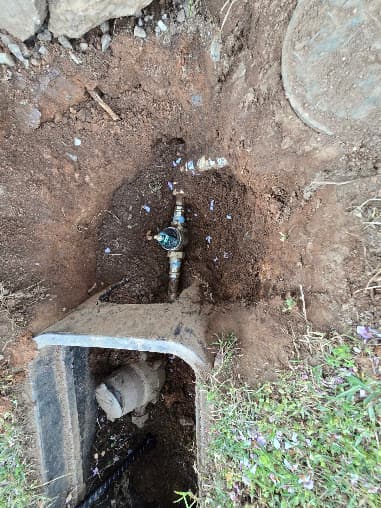
Low pressure, yard pooling, or unexpected meter movement near North Springs in Sandy Springs may point to a water line problem. Our Water Line Repair and Installation page explains your options with upfront flat rate pricing.
Fulton County Trenchless Pipe Repair for Water and Sewer Line Problems
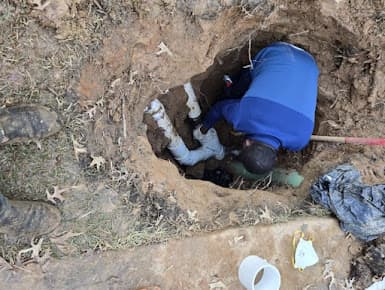
Trenchless pipe repair is designed to address certain underground pipe failures with less excavation than traditional digging. Instead of opening a long trench across the property, a plumber may use access points to repair, line, or replace the damaged pipe with a more contained work area. The exact method depends on the pipe material, location, depth, damage type, and whether the line still has enough structure for the selected approach.
Water lines and sewer lines fail in different ways. A water line may develop a leak from corrosion, soil movement, pressure stress, or an aging connection. Warning signs can include low water pressure, a higher water bill, wet soil, or water running near the meter when all fixtures are off. A sewer line may suffer from roots, bellies, cracks, offsets, or collapsed sections. Sewer symptoms can include slow drains, gurgling toilets, wastewater backups, yard odors, or recurring clogs.
A real-world example might involve a homeowner in High Point with a main sewer problem under a landscaped front yard. The line has root intrusion and a cracked section, but the driveway, irrigation, and mature shrubs make open excavation complicated. If inspection shows the pipe condition is suitable, trenchless sewer repair or sewer pipe lining may reduce the amount of digging needed. If the pipe is collapsed or severely misaligned, another repair method may be required.
Trenchless repair may be considered for:
- Underground water line leaks with difficult access
- Sewer pipe cracks or root intrusion in suitable lines
- Pipe lining for lines with enough structural integrity
- Trenchless pipe replacement when a full line needs renewal
- No-dig pipe repair near driveways, patios, or landscaping
- Sewer and water line repair planning before major property disruption
- Underground pipe repair where access points are available
The advantage is not simply convenience. Less digging can mean less disruption to daily routines, fewer restoration concerns, and a more focused repair process. However, the pipe must be evaluated first. Trenchless work should be recommended because the line qualifies, not because it sounds easier.